
Pastries and Cookies, Classics, Cakes
Moist Rhineland Christmas Stollen with Marzipan, Ready to Eat Right Away


4.9 (15)out of 5, 15 ratings
- Prep
- 1 day
- Bake
- 35 min
- Total
- 1 day
- Makes
- 1
Fresh from the oven, still warm, with a thick layer of butter and a generous cloud of vanilla sugar all around: that is exactly how I like my Rhineland Christmas stollen with marzipan best. What makes this recipe special is that it needs no aging time and still turns out really moist and full of flavor. So if you only start thinking about baking this weekend, you can enjoy the stollen right away over the holidays without letting it rest for weeks first.
Read more
My trick from the bakery is the fruit filling of candied orange peel, candied citron peel and raisins, which I soak in rum the day before, plus a small piece of plain dough that later goes over the whole stollen as an outer layer. That keeps the marzipan center soft inside, the crumb moist and the surface nice and smooth for the thick butter and sugar coating. Here is my recipe for Rhineland Christmas stollen with marzipan:
Ingredients
Fruit filling
- ⅔ cup100 graisins
- 1 ¾ oz50 gcandied orange peelDiced candied orange peel. In the US use candied orange peel; in the UK, candied orange peel or cut mixed peel.
- 1 ¾ oz50 gcandied citron peelCandied peel of the citron, a large lemon-like fruit, diced for fruit breads and Christmas baking. In the US use candied citron or candied lemon peel; in the UK, cut mixed peel or candied lemon peel.
- ¼ cup60 mlrum
Sponge
- 1 cup130 gall-purpose flourIn German recipes plain flour means soft wheat flour Type 405 unless stated otherwise. In the US use all-purpose flour; in the UK, plain flour.
- ⅓ cup80 mlmilkwarm
- 1 oz30 gfresh yeastfresh. German recipes use either a 42 g cube of fresh yeast or a 7 g packet of dry yeast; one cube equals about two packets. In the US use active dry or instant yeast; one 1/4 oz (7 g) envelope replaces half a cube of fresh yeast. In the UK, fast action dried yeast (7 g sachet per half cube), or fresh yeast from a supermarket bakery counter.
Dough
- 9 oz250 gsponge (from above)
- 2 cups250 gall-purpose flour
- 1 stick plus 4 tbsp170 gunsalted buttersoftened. German butter is unsalted and has about 82 percent fat. In the US use unsalted butter; European-style unsalted butter is closest. In the UK, unsalted butter.
- 3 tbsp40 ggranulated sugar
- 2egg yolks
- ¾ tsp4 gsalt
- zest of 1 organic lemon
- 2 tspstollen spiceA spice blend for German Christmas stollen with cardamom, mace, nutmeg, cinnamon and allspice. In the US use cinnamon with a little cardamom, nutmeg or mace, and allspice; in the UK, mixed spice with a pinch of cardamom and mace.
Also needed
- 4 ½ oz125 galmond pasteRaw marzipan with a high almond and low sugar content, used for baking. In the US use almond paste (not marzipan, which is sweeter); in the UK, almond paste, or the marzipan with the highest almond content you can find.
- ½ cup60 gslivered almondstoasted. Blanched almonds cut into thin sticks. In the US and in the UK, use slivered almonds.
- 1 stick plus 3 tbsp150 gunsalted buttermelted
- ½ cup100 ggranulated sugar
- 4 tspvanilla sugar1 packet = 2 tsp (8 g), so 2 packets = 4 tsp (16 g). Sugar flavored with vanillin (artificial vanilla), sold in small packets of about 8 g. In the US use 1 tsp vanilla extract plus 2 tsp sugar for each 8 g packet; in the UK, vanilla sugar sachets, or 1 tsp vanilla extract plus 2 tsp sugar per sachet.
Method
The day before, soak the raisins, candied orange peel and candied citron peel in the rum. Let them steep overnight.
For the sponge, knead the flour, milk and yeast together and let it rise for at least 60 minutes.
Add the remaining dough ingredients and knead everything into a dough.
Take a portion about the size of a tennis ball from the plain dough, cover it and set it aside.
Drain off the rum and knead the soaked fruit and the almonds into the dough. Gently and briefly! Then cover the dough and let it rise for at least 60 minutes.
Turn the dough out onto a floured work surface and shape it into a round.
Roll out the reserved plain dough into an oval with a little flour, so that it fits over the stollen as an outer layer.
Shape the large piece of dough into a stollen and fill it with the almond paste. Lay the rolled-out outer layer on top and press it on. Put a stollen baking cover over it.
Let it rise again for about 30 minutes.
Bake in the preheated oven on convection (fan) at 375°F (190°C) or conventional (top and bottom heat) at 400°F (200°C) for up to 50 minutes.
After baking, remove the baking cover and brush the stollen with the melted butter while it is still hot. Press the sugar onto it and let it cool.
If you like, give it a generous snowfall of powdered sugar (confectioners' sugar; in the UK, icing sugar).
Ready to enjoy right away.
Questions and answers
What is the difference between stollen and Christmas stollen?
Which ingredients go into a classic Rhineland Christmas stollen with marzipan?
Does a Christmas stollen with marzipan need to age, or can I eat it right away?
What is the stollen baking cover for, and do I really need it?
Why do I soak the candied orange peel, candied citron peel and raisins in rum overnight?
How much butter and sugar go on the stollen after baking?
Similar recipes
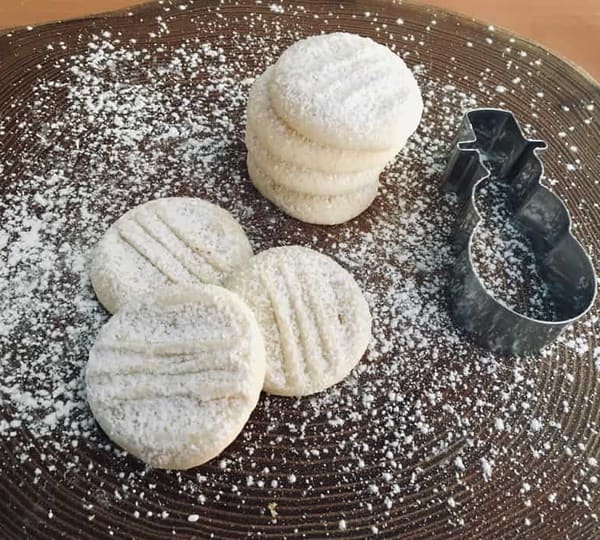
Snowflake Cookies
4.6 (110)out of 5, 110 ratings
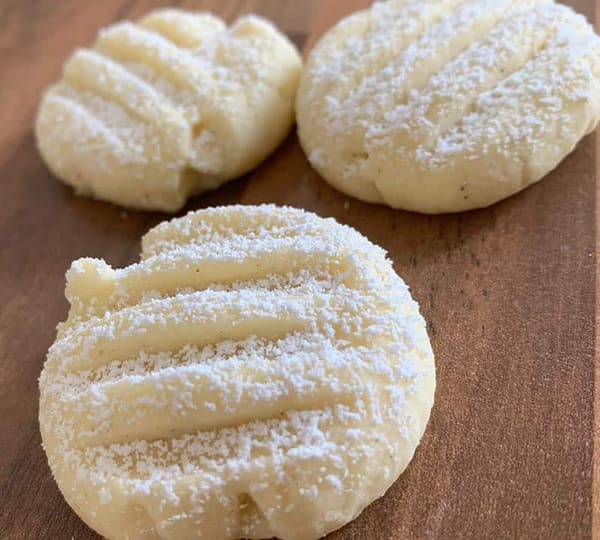
Snowflake Cookies
5.0 (85)out of 5, 85 ratings

Peanut Butter Brownie Muffins
4.8 (41)out of 5, 41 ratings
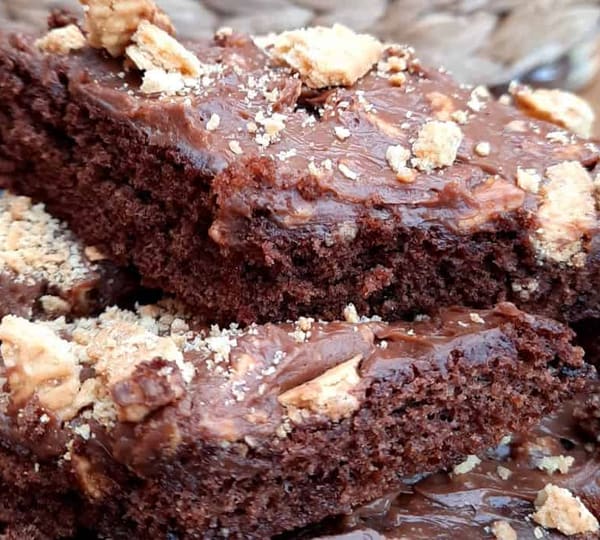
Lebkuchen Brownies with Speculoos Chocolate Cream Cheese Frosting
4.8 (39)out of 5, 39 ratings

Dominosteine Muffins
4.9 (37)out of 5, 37 ratings
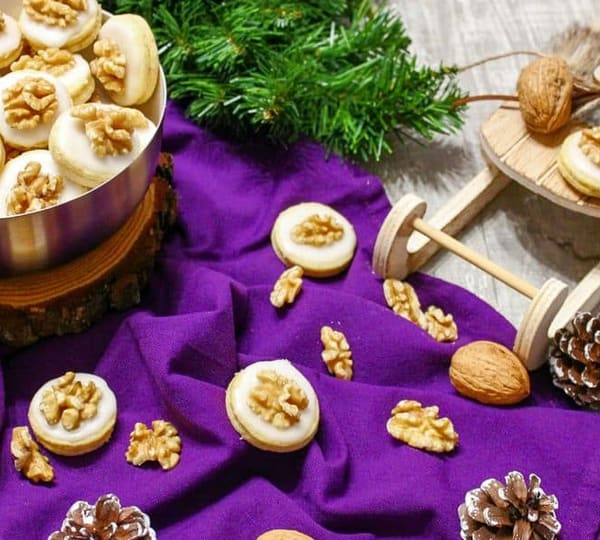
Walnut Thaler Cookies
5.0 (30)out of 5, 30 ratings


